Showing posts with label LIFE and HEALTH MENTORING(TRAINNING). Show all posts

Wednesday, 10 June 2015

ABS for a total Fit Body


Doing push ups in this position is killer for the obliques! Aim for 30 reps on each side daily. Tone your arms and your abs.

Thursday, 8 May 2014

Thought about the Life Mentoring process.

When a flower stem breaks through the soil in order to find sunlight you observe a movement. It is movement of physical nature that is absolutely essential in changing this Being’s form: from a stem into a flower!

Humans can live this exact situation of growth. It is a fact that your Body can act like the stem, it can pierce through all ground that stands between who U are and the Person U need, want and must Be.
Movement and Physical awareness are absolutely essential to Inner Consciousness. 

Sofia Naique
(Expert in mathematics, Coacher and student of Life Mentoring.)

Wednesday, 26 March 2014

Mindful Movement

Thursday, 5 December 2013

Calming Mind Chatter

One of my favorite things to do is to meditate. It is so calming and nurturing to my mind, body and soul. It is one of my favorite ways to restore my energy, clarity and focus. I often receive some amazing information when I meditate especially when I reach the point where everything is quiet and still within. It wasn’t always like this, I remember when I first began to meditate my mind would chatter non-stop. I felt like it was going 100 miles per minute. There were times that I would get so wrapped up in the mind chatter that at the end of my mediation session I wasn’t sure if I received any benefits. However later I discover that even though it may have appeared that I was not benefitting through the times of non-stop mind chatter, I was actually benefitting beyond my belief.
 

Study after study has shown the tremendous benefits that mediation has on the mind and the body. Neuroscience can show us what happens in the brain when we meditate. For instance areas of the brain associated with stress slows down and parts of the brain associated with feeling joy, peace and compassion become active. The evidence that meditation triggers positive changes within the brain and the body is overwhelming whether we are meditating with mind chatter or not. 


For the beginner meditator who is not aware of the positive changes occurring within the brain and the body, the mind chatter may be just enough to frustrate them to the point where they feel like they want to quit. If you fit into this category, don’t fret because I want to understand that you are not alone and there are some things that you can do to assist you with the mind chatter.


One of the things you can do is just let the mind chatter. Don’t get wrapped up in the chatter just let the thoughts come and go. Let the thoughts come in and let them roll out similar to watching the waves of the ocean roll in to the shore and roll back out the ocean. Just let them be without focusing on what they are and why they exist. When you practice meditation regularly, you will begin to notice that part of the mind that is untouched by thoughts. You might experience that deeper layer of consciousness as a pure sense of being or as a sense of being a witness. Sometimes it feels as if you have plunged into the deeper water of the mind, where it is calm while all the time the mental chatter continues. In other words the mind can keep thinking but you are not affected by those thoughts.


Another tool that you can use is your breath. It is a wonderful way to assist you with not getting too wrapped up and focused on the thoughts that are flowing into your mind.

As a matter of fact, each time you feel that you are beginning to focus on the chatter within your mind shift your focus to taking in a deep breath and letting it out. The breathing helps to distract you from the mind chatter while allowing your body to take in much need oxygen and release the toxic carbon dioxide. Mindful breathing is a form of pranayama and is so yummy to use during the mediation process.

 
The last suggestion that I have to offer to you is to simply let yourself keep coming back to the sensations of the breath in the body, or the felt sense of energy in the heart or the vibratory quality of a mantra. A mantra is something that you repeat throughout your meditation session such as the word, “Om” or “Peace.” By doing these things in time you will notice the thoughts drift more and more into the background while the underlying sense of being comes more into the foreground and what a wonderful feeling that is.


Wishing you much health and wellness!


Namaste,


Tuesday, 26 November 2013

Benefits of Yoga


Over the last several years yoga has emerged to a new popularity here in the west but it has been practiced for thousands of years in the east, particularly in India where it originated. It is believed that yoga is the sister science of Ayurveda and the two sciences work wonderfully together.
As yoga has become increasingly more popular in the western world, scientist have armed themselves with new tools that allow them to look even deeper into the body allowing to see what happens physiologically when a person practices yoga- not just asana or postures but pranayama and meditation. The doctors, neuroscientist, psychologist and other researchers are uncovering fascinating evidence of how the practice affects us mentally and physically and may help to prevent and assist in the treatment of a number of the most common ailments that jeopardize our vitality and wellbeing.
Dozen of studies are being conducted at places like Duke, Harvard and the University of California San Francisco in an effort to establish how truly beneficial yoga is for the mind and the body. While the studies of the impact that yoga has on our health and wellbeing are in the early stages, patterns are beginning to emerge that indicate that the knowledge that we have about how yoga keeps up healthy and well are just the tip of the iceberg.
Some of the benefits of yoga are:
·      Relief for certain types of chronic pain
·      Decreasing anxiety and depression
·      Less prone to emotional outburst
·      Positive moods, equanimity and emotional resilience
·      Helpful in treating insomnia and other sleep disorders
·      Helps your brain to stay sharp and work better
·      Better sex
·      Helps to reverse the aging at the cellular level
·      Fortifies the body’s ability to ward off illness ~ Immune booster
·      Helps to decrease stress
·      Lower inflammation or inflammatory levels within the body
·      Reduction of risk factors associated with heart disease
·      Helps to keep joints lubricated which allows them to move more freely
·      Healthier and stronger spine
·      Decrease back pain
·      Effective for maintaining a healthy weight
If you have been on the sidelines trying to figure out what yoga really is or if you should indulge in a yoga class, I say let the above benefits be a motivating factor for you to jump in and explore yoga. There are yoga studios popping up all over the place and I’m sure you will find one in your city or in a city close to you. Yoga is a great way to do something good for your body and mind that has lasting beneficial affects. So don’t be shy jump in and let your body and mind enjoy the benefits of yoga.
Wishing you much health and wellness!
Namaste,

Saturday, 14 September 2013

EMBRACE MEDITATION


FIRST, MEDITATION IS NATURAL!
Even a few minutes a day can trigger positive transformation in your biochemistry, neurology – even DNA. Conclusive studies show that meditation improves health, happiness and peace of mind. It’s the ultimate health bargain, and a great life skill.
 

Think
Are you addicted to busyness? Do you struggle with monkey mind throughout the day? Have trouble settling down and being alone with your thoughts? Do you overact to stressful situations?


Meditation is a skill you can develop that can anchor your day and help steady your thoughts — and yourself. The more you do it, the more awareness you create and compassion you build. So instead of feeling overwhelmed, you can take mindful, meaningful action no matter the situation. 


Act
START and END SIMPLY - Not into structured meditation? No problem. Take a few minutes each morning to set your intentions; in the evenings, spend a few moments ending the day with gratitude and reflection.

Attend a Meditation Retreat or a Formal Formation - Are you the type of person inclined to shirk stillness or who benefits from instruction? A formal meditation retreat or class are great places to find both.


Practice Active Meditation - Seeking active, yet mindful action? Yoga, Chi Kung and Tai Chi offers a physical practice that is also a path toward calmer action, improved relationships and a better mind-body connection. 


Tame Your Monkey Mind - Distracted? Worried? Busy? For some people being alone exacerbates their anxiety, but mastering tumultuous thoughts can lead to a healthier, happier you.


START TODAY, ALONE, IN A CLASS, PRIVATE COURSE, WITH A GROUP OF COWORKERS OR FRIENDS,EVEN IN YOUR OFFICE OR COMPANY!

BUT START AND FEEL THE POSITIVE RESULTS


Meditation is a Natural Training 4 Life
 

FOR MORE INFORMATION CALL:

Pedro PROFF – LIFE, HEALTH and ART MENTORING

Phone: +351 91 456 03 28

Email: prof.pedroescobar@gmail.com

Sunday, 1 September 2013

8 Fitness-Boosting Foods and Nutrients

If optimal fitness is your goal, there's no getting around your diet. That’s right, fitness is not all about designing the ideal workout plan, as your diet can easily make or break an otherwise excellent regimen.

Knowing which foods and specific nutrients deliver the most bang for your buck in terms of supporting your fitness goals can go a long way.
First and foremost, however, keep in mind that while pre-packaged processed foods may be convenient, cooking from scratch using fresh unprocessed ingredients is an absolute must if you want to improve your health.

Processing tends to denature nutrients, so what you end up with is typically a far inferior version compared to the real thing.

Fitness-Boosting Foods and Helpful Supplements

Here, I’ll review eight of my top picks for “most valuable fitness foods,” and the featured article in Men’s Fitness magazine lists another 20. I don’t agree with all of their selections however, such as pasteurized milk and yoghurt, unfermented soy products, and whole wheat bread. To find out why, check out the hyperlinks provided.
The following eight however, are foods and specific nutrients that I believe are among the most helpful, in terms of supporting your fitness and overall good health. Aim to incorporate as many of these foods into your diet on a daily or weekly basis, and you'll be off to a great start. Keep in mind that all of the items on this list should be organic, and if possible grass-fed/pastured or wild.
If you're like most people—including many athletes—you're probably eating too many carbs. Your body's need for sugar is, biologically, very small. And when you consume more than you need, your body turns it into fat.
Remember, you do not get fat from eating healthy fats—you get fat from eating too many carbs (sugar). Hence, what you’ll find on my list are primarily healthful fats, which is what you’ll want to replace the lost carbs with for energy, along with high-quality proteins and a couple of specific nutrients that are particularly beneficial for boosting athletic performance.
Remember: you cannot exercise your way out of a bad diet, and the first step toward improving your diet is to cut out as much sugar/fructose and grain-carbs as possible, and replace the carbs with healthful fats, and a moderate amount of high-quality protein.

#1 Whole, Fresh Avocado

Avocado, which is classified as a fruit, are rich in monounsaturated fat that is easily burned for energy. As I’ve mentioned before, eliminating grain carbs is one of the best ways to support your health and maintain your weight, but when you cut down on carbs, you need to increase your intake of healthy fats. Avocados are an excellent source, along with organic raw butter, coconut oil, and organic pastured eggs, just to name a few.
Healthful fats provide an ideal form of fuel for sustained energy during a workout. It’s far better than carb-loading for most people. I’ve previously written about the importance of avoiding fructose and grains before and after a workout, as sugar will negate many of the benefits you reap from exercise.
This is especially true if you do high intensity exercises, which will boost your body’s production of human growth hormone (HGH). Consuming carbs within a couple of hours prior to or after such exercise will effectively prevent HGH from being produced.
There’s also evidence suggesting that limiting your intake of protein can be helpful for long-term good health and the prevention of cancer. At the very least, most people are consuming far too much poor-quality protein, such as beef and animal products from livestock raised in confined animal feeding operations (CAFOs). Here again, if you cut down on protein, you need to replace lost calories with healthy fats such as avocados, coconut oil, olives, olive oil, butter and nuts.
Overall, most people would do well to get upwards of 50-70 percent fat in their diet (along with high amounts of vegetable carbs, moderate-to-low amounts of high-quality protein, and very little, if any, carbs). According to the California Avocado Commission, a medium Hass avocado contains about 22.5 grams of fat, two-thirds of which is monounsaturated. They’re also very low in fructose, which is yet another boon.
Avocados are also very high in potassium and will help balance your vitally important potassium to sodium ratio, and it enables your body to more efficiently absorb fat-soluble nutrients, such as alpha- and beta-carotene and lutein, in other foods eaten in conjunction.  You can review additional information on avocados by visiting my What are Avocados Good For page.

#2: Organic Coconut Oil

Coconut oil is nature's richest source of healthy medium-chain fatty acids (MCFAs), which your body sends directly to your liver to use as energy.1 This makes coconut oil a powerful source of instant energy to your body, a function usually served in the diet by simple carbohydrates. Numerous studies have shown that MCFAs promote weight loss2 and help improve insulin sensitivity and glucose tolerance. Additionally, research has demonstrated that, due to its beneficial metabolic effect, coconut oil also increases the activity of your thyroid. A sluggish thyroid is one reason why some people are unable to lose weight, no matter what they do.
Half of the fat content in coconut oil is lauric acid—a fat rarely found in nature—that could easily qualify as a "miracle" ingredient because of its unique health promoting properties. Your body converts lauric acid into monolaurin, which has anti-viral, anti-bacterial and anti-protozoa properties, for example.
You can add raw organic coconut oil to green juices, smoothies, and even coffee (in lieu of sugar). It’s also the ideal choice for all types of cooking. In fact, it's the only oil stable enough to resist mild heat-induced damage. So, whenever you need an oil to cook or bake with, use coconut oil instead of butter, olive oil, vegetable oil, margarine, or any other type of oil called for in recipes.

#3: Wild Alaskan Salmon

Wild Alaskan salmon is an excellent source of essential animal-based omega-3 fats (EPA and DHA), high-quality protein, as well as astaxanthin and other antioxidants—all of which are important nutrients for fitness. Over the last several years, I’ve vigilantly warned against eating most fish, as virtually all fish these days contains dangerously high levels of mercury and other toxic contaminants. If it wasn't for the health risks posed by this contamination, fish in general would be among my absolute most recommended foods for their outstanding nutritional benefits, including high levels of omega-3 with DHA and EPA, which most people are desperately lacking in their diets.
However, there are still some exceptions, and wild Alaskan salmon is one of them, as long as its purity can be verified. This was so important to me personally; I did loads of research to find a trusted source of Wild Alaskan salmon that passed third-party testing by an independent lab. I strongly recommend avoiding farmed fish though, particularly farmed salmon, and even more specifically genetically engineered farmed salmon.

#4: Organic Pastured Eggs

Proteins are nutrients that are essential to the building, maintenance and repair of your body tissues such as your skin, internal organs and muscles. They are also the major components of your immune system and hormones. Proteins are found in all types of food, but only foods from animal sources, such as meat and eggs contain complete proteins, meaning they provide the eight essential amino acids.
Eggs, as well as the chickens they come from, are both healthful sources of protein but ONLY if raised the way nature intended. True free-range eggs, now increasingly referred to as “pasture-raised,” come from hens that roam freely outdoors on a pasture where they can forage for their natural diet, which includes seeds, green plants, insects, and worms. Barring organic certification, which is cost-prohibitive for many small farmers, you could just make sure the farmer raises his chickens according to organic, free-range standards, allowing his flock to forage freely for their natural diet, and aren’t fed antibiotics, corn and soy.
Testing3 has confirmed that true free-range eggs are far more nutritious than commercially raised eggs. The dramatically superior nutrient levels are most likely the result of the differences in diet between free ranging, pastured hens and commercially farmed hens. Besides high-quality protein, pasture-raised eggs also contain healthful saturated fats and cholesterol—both of which your body actually needs for optimal health.
You can usually tell the eggs are free range or pastured by the color of the egg yolk. Foraged hens produce eggs with bright orange yolks. Dull, pale yellow yolks are a sure sign you're getting eggs form caged hens that are not allowed to forage for their natural diet. Cornucopia.org offers a helpful organic egg scorecard that rates egg manufacturers based on 22 criteria that are important for organic consumers.
Ideally, you’ll want to eat your eggs raw, or as close to raw as possible. Keep in mind that the closer to raw you eat them, the more important it is to make sure the eggs are truly organic and pasture-raised, as CAFO-raised eggs are far more prone to be contaminated with pathogenic bacteria like salmonella. If you choose not to eat your egg yolks raw, poached or soft-boiled would be the next best option. Scrambled or fried eggs are the worst, as this oxidizes the cholesterol in the egg yolk. Egg yolks also contain valuable antioxidants,4 which are reduced by as much as 50 percent when the egg is fried or boiled.

#5: Organic Pasture-Raised Chicken

The foods you eat after exercise produce different effects on your body's metabolism, so planning your post-workout meal is an important factor. Research has shown that aerobic exercise most effectively enhances insulin sensitivity when your post-workout meal has relatively low carbohydrate content.
After a cardiovascular workout, wait 30-45 minutes, and then consume a high-quality source of protein (whole food) along with a vegetable-type carbohydrate. An example would be a spinach salad and some chicken. The reason why you'll want to wait a bit after the session to eat is to ride the fat burning wave of your cardio session. However, waiting more than an hour is typically too long, and can start to slow down your metabolism because your body goes into starvation mode.
As mentioned above, organic free-range chicken is an excellent source of protein and essential amino acids for muscle growth and maintenance. Organic chicken is also raised without the use of antibiotics (which are often used to promote growth in confined animal feeding operations, aka CAFOs). This is another important aspect, as over half of the antibiotics fed to mass-produced farm animals, including chickens, are identical to the ones administered to humans, and overuse of such antibiotics is the primary driver of antibiotic-resistant disease. Antibiotics also kill off beneficial bacteria in your gut, which can lead to chronic gut problems when consumed on a regular basis.

#6: Antibiotic Free, Grass-Fed Whey Protein

Whey protein, which is derived from milk, is considered the gold standard of protein by many, and is one of the best types of foods you can consume before and after exercise. This is particularly true after a resistance or strength training workout, when you need a meal that can be rapidly absorbed. Here, whey protein is an ideal choice, along with a higher glycemic (fast released, starchy) carbohydrate, such as a banana. The potassium in the banana seems to help with recovery. Ideally, you'll want to consume it 15-30 minutes after your intense weight training session.
If you want, you can take 20 grams of whey protein (make sure there’s no added sugar) 30 minutes before exercise, and another serving about 30 minutes afterward. This can help increase both fat burning and muscle building. According to a 2010 study,5 consuming whey protein (20g protein / serving) 30 minutes before resistance training can boost your body's metabolism for as much as 24 hours after your workout.
If you are only going to do one whey meal, then your post-workout meal is the most crucial, especially if your aim is to increase your muscle growth.
It appears as though the amino acids found in high-quality whey protein activate certain cellular mechanisms (including mTORC-1), which in turn promote muscle protein synthesis, boost thyroid, and also protect against declining testosterone levels after exercise. This is in stark contrast to athletes who load up on carbs to fuel their workouts. As mentioned earlier, “carb loading” is a mistake, particularly for people engaged in intense strength training, as you will burn carb fuel very quickly and then “hit the wall.” The same goes for most people who start their day with muffins, bagels, or pancakes for example. This type of breakfast typically ignites a vicious cycle of hunger and snacking on even more carbs. And the more you continue eating these carb snacks, the more insulin resistant you become.
Since whey protein is a by-product of dairy, it’s important to make sure it’s derived from grass-fed, non-hormonally treated cows. It should also be minimally processed in order to preserve beneficial immuno components such as immunoglobins, bovine serum albomin, lactoferins, and other key amino acids and nutrients.
Most commercial whey products are derived from pasteurized dairy and processed with heat and acid, which destroys the whey's fragile Immuno components and damages important amino acids. Many of them also contain chemical additives, detergents and artificial sweeteners, which are known for their health shattering effects. And contrary to popular belief, artificial sweeteners actually sabotageyour weight loss efforts by impairing your ability to regulate your appetite naturally.

#7: Astaxanthin

Astaxanthin is a natural compound that clinical studies have shown helps increase strength and stamina, decrease post-exertion recovery time, and decrease soreness after physical activity, which is why it’s on this list. It’s also thought to be one of the most potent antioxidants currently known, with a wide range of health benefits over and beyond those mentioned here. One of the benefits of astaxanthin that has piqued the interest of researchers though is its ability to enhance athletic performance.
Reports of significant health improvements from astaxanthin supplementation have come in from athletes all over the world. For example, Tim Marr, a professional triathlete in Honolulu, Hawaii, suffered from overuse injuries and sun overexposure from rigorously training in the intense Hawaiian sun. Since starting a natural astaxanthin supplement, he's experienced significantly fewer overuse injuries and fewer adverse reactions to the sun. Marr credits astaxanthin with helping him achieve his goals and says the supplement is now one of his favorite tools as a professional athlete. I'd say it's working—he went on to win the 2006 Pan American Long Distance Triathlon.
There are only two main sources of natural astaxanthin—the microalgae that produce it, and the sea creatures that consume the algae (such as salmon, shellfish, and krill). Most of astaxanthin's benefits come from its powerful anti-inflammatory and antioxidant properties.
Inflammation can slow an athlete down and cost him or her valuable training days. If you are a professional athlete, you can't afford to take time off to recover from fatigue or sore joints and muscles. So anything that can reduce inflammation will undoubtedly augment your athletic capacity—and astaxanthin is one of the most effective natural inflammatories there is. It has the ability to travel to every cell, tissue and organ in your body and helps your physical performance in the following ways:
Scavenging free radicals in your energy-producing mitochondrial cells Decreasing muscle inflammation Improving visual acuity and depth perception
Decreasing oxidative damage to your cell membranes and DNA Reducing lactic acid in your muscles (a byproduct of physical exertion) Improving sun tolerance and reducing your tendency to sunburn

#8: Rhodiola Rosea

The perennial plant Rhodiola Rosea has also been found to have exercise benefits. It’s known as an “adaptogen,” which can help your body adapt to physical, chemical, and environmental stress, and is used by many athletes for improving athletic performance6 and shortening recovery time between workouts. According to a 2004 study,7 extracts of Rhodiola rosea radix had an anti-inflammatory effect on healthy untrained volunteers, before and after bouts of exhausting exercise. It also protected muscle tissue during exercise. According to the abstract:
“Professional athletes effectively use Rhodiola rosea ('golden radix') extract as a safe nonsteroid food additive improving endurance and rapid recovery of muscles during several decades. Rhodiola rosea extract improves muscle work due to mobilization and more economic expenditure of energy resources of muscles. The use of adaptogens including R. rosea improved physical endurance of male athletes, reducing blood lactate level and accelerating recovery after exhausting exercise.”
Other studies have similarly found that Rhodiola can significantly increase time to exhaustion during exercise,8 reduce C reactive protein levels and improve neuromotoric fitness.
For example, a 2003 animal study9 found that rats given 50 mg/kg of Rhodiola rosea extract along with the same amount of Rhodiola crenulata root, prolonged the duration of exhaustive swimming the rats were capable of by nearly 25 percent. This improvement was found to be due to the extracts’ ability to activate the synthesis or resynthesis of ATP in mitochondria. The extracts also stimulated reparative energy processes that take place post-exercise. Rhodiola rosea was determined to be the most effective of the two extracts for improving physical working capacity.

Remember: Avoid Sugar Before, During and After Exercise!

Besides knowing which foods will help you optimize your exercise efforts, you also want to pay careful attention to what NOT to eat. To maximize the benefits of exercise, including weight loss benefits, you'll want to carefully avoid fruit juices, energy drinks, sports drinks, most energy bars, and other sweetened beverages like Vitamin Water.
These, and virtually all other processed foods and beverages, contain high amounts of sugar, including fructose, which will effectively sabotage your efforts and nullify many of the benefits of exercise. Remember, 80 percent of the benefits you reap from a healthy lifestyle comes from you diet, and the remaining 20 percent from exercise. Exercise cannot counteract the harmful effects of a high-fructose diet.
Fructose fools your metabolism and essentially tricks your body into gaining weight by turning off your body's appetite-control system. It also rapidly leads to weight gain and abdominal obesity ("beer belly"), decreased HDL, increased LDL, elevated triglycerides, elevated blood sugar, and high blood pressure -- i.e., classic metabolic syndrome.
Additionally, consuming fructose, including that from fruit juices, within two hours of a high-intensity workout will decimate your natural human growth hormone (HGH) production - a MAJOR benefit of interval training. This happens because fructose increases production of the hormone somatostatin, a primary purpose of which is to inhibit the production of HGH...
Granted, there is a small group of elite and highly competitive athletes for whom increasing growth hormone is not a primary goal. For these athletes, consuming some carbs, preferably dextrose-based, in the recovery period is probably a good idea to improve their recovery time and will help to maximize their athletic performance. Since they're competing, they're less likely to be concerned about long-term growth hormone levels. But for most others, increasing HGH through high intensity interval exercise is an important factor for optimizing health, so most of my readers will want to heed to the sugar and juice restriction.
Aside from avoiding fructose like the plague, remember to combine a quality protein with a veggie-type carb in every meal, no matter whether it's a resistance training day, an interval cardio day, or a non-workout day. However, after strength training (as opposed to cardio training), your body tends to need more rapidly absorbed nutrients and a higher glycemic (fast released, starchy) carbohydrate. Another slight difference between interval cardio and strength training days is the timing of your meal.
  • After cardio, you want to wait 30-45 minutes, and then consume a high-quality protein (whole food) and vegetable-type carbohydrate. (An example would be a spinach salad and some chicken, or high-quality whey protein).
  • After a resistance workout (muscle-building day), the ideal time to consume your post-workout meal is 15-30 minutes after finishing your session, in order to help repair your damaged muscles. Here, whey protein is an ideal choice as it’s predigested and therefore rapidly digested and easily assimilated, along with a higher glycemic (fast released, starchy) carbohydrate, such as a banana.
Friday, 23 August 2013

Yoga Moves to Beat Insomnia, Ease Stress, and Relieve Pain

Here are some favourite calming and comforting moves.

Magic moves for more z's

The next time you find yourself lying awake at night, grab your yoga mat: Research suggests this ancient form of exercise can help combat insomnia, relieve stress, and ward off aches and pains that can keep you tossing and turning. Closing your eyes and breathing long, slow breaths can have a sedating effect on the body, says Sara Ivanhoe, featured instructor on VH1's Celebrity Rehab. "I've had trouble sleeping since I was an infant," she says. "One of the reasons I got into yoga is because I wanted to learn to relax on command." (Watch her interview here.)

Here are some of Ivanhoe's favorite calming and comforting moves. For best results, put on your pj's first and do them right before you turn in for the night.

combat-insomniaCombat insomnia

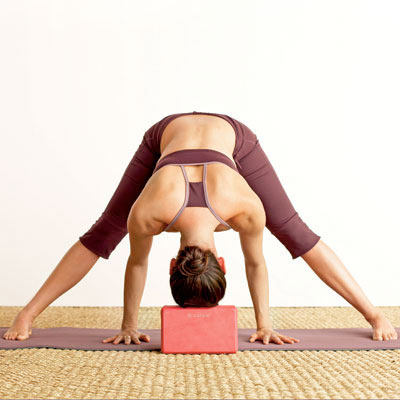
Easy-to-hold Iyengar yoga inversions, which send blood to the head, can help send you off to dreamland. The gentle Supported Standing Wide Leg Forward Bend is easy to relax into and will help still your thoughts.

How-to: Stand with hands on hips and feet approximately four feet apart, toes slightly turned in. Place a block or short stack of books on the floor in front of you. Breathe deeply; exhale, fold forward, and place hands on floor shoulder-distance apart with fingers spread. Lengthen spine forward and place crown of head on block so both head and neck are fully supported. Draw shoulders away from ears and hug elbows in. (If you feel a hamstring stretch, widen legs and raise block.) Close eyes; breathe slowly in and out through nose. Hold up to five minutes, then come out of pose slowly.

Note: If you have glaucoma or high blood pressure, stick to upright poses.

yoga-feet-wall-sleep-optimized

Cure a headache

A pounding head can keep you from falling asleep at night, but you don't always have to pop a pill. This move, called Legs up the Wall, gently stretches the muscles in your neck (often the culprit of tension headaches) and relaxes you at the same time—a combo that can ease your ache in just a few minutes.

How-to: Sit on one end of a mat with your right hip touching a wall. Lean back, turn to lie flat on the mat, and extend your legs up the wall; your butt should be nearly touching the wall and your legs should be together. Put your hands on your belly or rest them on the mat above your head. Close your eyes, relax your jaw, and drop your chin slightly. Breathe deeply and slowly in this position for 3 to 10 minutes.

ease-back-pain

Ease back pain

Slipping into bed should be a peaceful experience, but many Americans suffer from chronic back pain that prevents them from relaxing comfortably. This reclined twist will give you on-the-spot relief and ward off future trouble by stretching and strengthening muscles and ligaments near your spine.

How-to: Lie on your back on a mat, bend your legs, and squeeze your knees to your chest. Keeping your legs bent and knees together, lower both knees toward the mat on the left side. Hold your knees in place with your left hand and gently twist to the right. Extend your right arm and look right; hold for 5 to 15 breaths. Bring knees and hands back to the center, then repeat to the right. Stretch to both sides three times whenever you feel tightness in your back.

soothe-stress

Soothe stress

Relaxing for one minute in Child’s Pose gives your mind and muscles a chance to escape everyday madness.

How-to: Sit back on heels with the insides of legs and feet touching. Lean forward, bowing torso over thighs and lowering forehead to mat. Extend arms forward, palms down. Relax into pose, widening knees or bending elbows a bit, as desired. Focus on breathing, taking four to eight counts for each inhale and exhale and relaxing deeper into pose with each exhale.


Saturday, 17 August 2013

NT 4 LIFE


NT 4 Life

 Natural Training 4 Life with Pedro Proff


The True Natural Training teaches people from all ages. If you think to lie outside the age range, don’t worry, speak with us, we’ll train you too.
 
Point being, movement is for EVERYONE. MOVEMENT IS FUN.
 
U can be fit naturally. NO NEED GYMS.
 
Not just the already young and fit, or old and experienced. Movement is a vital part of our nature and we all deserve to have the freedom of movement. You deserve to be able to move efficiently and smoothly through any environment whether you’re racing up a flight of stairs, or playing Indiana Jones in a forest.
 
NT4Life - Natural Training for Life is the art of expressing yourself in your environment without limitation. It is a discipline and aims to incorporate everything that is useful. Is a holistic training approach using movement that developed out of  an natural obstacle course training. can be urban, mountain, sea...
Practitioners aim to move with dexterity, intelligence and efficiently past obstacles in their environment, using only their bodies and mind to exceed themselves; furthermore, with training we try to maintain as much momentum as is possible in a safe manner. NT4LIFE can include running, climbing, swinging, swimming, mix martial arts, yoga, free diving, cross mountain, vaulting, jumping, rolling, and more movements and natural sports, and the like, depending on what movement or activity is deemed most suitable for the given situation and/or goal.
 
4 more information contact me:
 
NT4LIFE - Pedro Proff - Phone. 00351 91 456 03 21 (Portugal / Lisbon)
                                             email. prof.pedroescobar@gmail.com


Monday, 12 August 2013

Chronic Stress: How to Reduce It.

Chronic stress. It's everywhere. If you live and work on this planet it's almost impossible to avoid.
Feeling stressed? Me too!
Today I'm writing about how to get rid of chronic stress and suggest some easy ways to get that burden off your back.

To get us in the mood, let's start with a short, guided meditation and stretch video.
Try it with me and see for yourself. You can do this at home or at your desk at work. (I use my ear buds at work.)
Now that you're a believer, lets have a look at chronic stress and how to get rid of it. (By the way, as you get better at becoming relaxed, you can keep your eyes open while watching the waves on the video.)
Stress has been around since the beginning of time. It started as the fight-or-flight response when early humans confronted a life-threatening situation. In that situation, stress hormones, adrenaline and cortisol, are produced. Your blood vessels constrict, blood pressure goes up, pupils dilate, heart rate quickens, and breathing becomes more rapid. The body is preparing itself to do battle or run. This response is essential in times of acute danger. But problems at work, crying kids, traffic, you name it can trigger the same response.

Given the pressures of daily life, chronic stress itself has become a life-threatening situation. It can cause a host of health problems including headaches, gastrointestinal issues, insomnia, trouble concentrating, anxiety, depression, increased body weight, high blood pressure and heart disease.

We can't eliminate the stress. But we can relieve the fight-or-flight response that sends our bodies into danger mode. And we can cultivate a relaxation response over time that will reduce our physiological stress reaction.
So what do we do about chronic stress? How do we get rid of it?

How? Relax. That's what my first yoga teacher used to say when I was all bent up in the pretzel pose with a grimace on my face. And, like that meditation you just did, it actually worked. Once I was able to relax, I was stress-free even in the pretzel pose.
Seriously, daily conscious relaxation exercises can make real difference in the way your body responds to stress. Dr Herbert Benson coined the phrase "relaxation response" in his book by the same name in 1975.
Since then he and others have conducted numerous studies, including a recent one at the Benson-Henry Institute for Mind/Body Medicine, that have detailed the body's intricate positive response to conscious relaxation exercises. In a nutshell, the relaxation response has the opposite effect of fight-or-flight. It engages the parasympathetic nervous system to counteract the effects of stress. You experience a feeling of deep relaxation and well being. And if you practice relaxation regularly you'll feel better and help yourself avoid those stress related health issues. That's how we get rid of chronic stress.

Meditation is just one of an almost infinite number of ways to consciously relax. Virtually anything that takes your attention away from your daily grind and makes you concentrate on just one thing can work. Doing the dishes, aerobic exercise, yoga, stretching, golf, playing a musical instrument, casting a fishing rod, playing with a cat, almost anything can work if you pay attention to only that and clear your mind. I'm partial to exercise because I get the benefits of a workout as well as the relaxation. It's my mantra. It's what I do to get rid of chronic stress.
Dr. Benson suggests you practice some form of conscious relaxation for 10 to 20 minutes every day to get rid of chronic stress in the long-term.
But what if you're pressed for time? (Pressed rhymes with stressed.)

Try this little exercise. Sometimes you only need a few seconds and you feel a lot better.

Sit down and close your eyes. (If you're on the street, duck into a doorway, stand and keep your eyes open and one hand on your purse.)
Let your muscles relax. Concentrate on your breathing.
Breathe in and hold your breath for one second, count one one hundred thousand, and breathe out.
Breathe in again a little deeper and hold for two seconds -- one one hundred thousand, two one hundred thousand -- breathe out.

Breathe in deeper and hold for three, then four, then five seconds.
When you get to around three seconds of breath holding, your stress level should start to drop and your mind should start to clear itself of thoughts.
After five, you should feel pretty good. This works well for me particularly in moments of acute stress.

That one worked too didn't it. I hope concentrating on reading this helped you reduce your stress and I hope you'll make conscious relaxation a part of your life.
It's a lifestyle change that's easy to make because it feels so good when you do it.
For more by Mirabai Holland, click here.
For more on emotional wellness, click here.

Sunday, 11 August 2013

Personalize Your Hydration

by ayurvedahealing
                
In the heat of summer, it is easy to work up a sweat with a vigorous yoga practice, working out at the gym or engaging in  outdoor activities. On extremely hot days such as when the temperature reaches about 95 degrees, it is important to pay attention to your hydration status. The slightest decrease in how hydrated your body is can result in changes within the body that can cause you problems if you don't pay attention to them. If you lose more liquid than you take in, you risk the possibility of becoming dehydrated. Signs and symptoms of dehydration include dry lips, a dry and sticky mouth, urine that is amber to dark amber in color, dizziness, muscle cramps, nausea or heart palpitations, which left untreated can become dangerous and may lead to cardiac arrhythmias.
Plain water is usually all you need however there are times when it is wise to spike your drink with a pinch of sodium, especially in the heat. Sports drinks serve the dual purpose of recharging you with electrolytes ( minerals, sodium and potassium) you sweat out during prolonged strenuous exercise. You probably don't need to worry about missing electrolytes after a light workout, but is you are planning an all day hike in the sun or hot yoga, you might want to consider an electrolyte enriched drink.
I recommend making a sports drink instead of buying one of the packaged sports drinks. They are easy to make and you will known exactly what is in your hydration drink. The following is a recipe that I think you will find easy to make and great tasting.
Enjoy!
Homemade Sports Drink
1/2 teaspoon of honey, 1 cup of hot water, Juice from a quarter of a lemon and a pinch of salt. Combine all the ingredients, stir, and chill the drink in the refrigerator to enjoy later.
You may drink this during and after exercise.
The sodium (salt) is made up of the electrolytes sodium and chloride, which will allow the water to stay in your tissues and the honey is an energy boosting carbohydrate that adds sweetness and delight to your drink.
I recommend that you use bottled water or filtered water when making this sports drink.
Homemade Hydrating & Energizing Drink
16 ounces of filtered or bottled water ( I recommend using IWater by G.I.A. for its single file alignment technology)
1-2 drops of lemon essential oil or
1/2 juice from a fresh lemon
Combine in a container, shake and enjoy.
This drink is also great to take to the gym as well to keep you hydrated and naturally energized.
Remember the most important thing is to make sure you take in some liquid and fruits such as watermelon, grapes, plums, lemons, oranges, honeydew and cantaloupe all have high water contents and add to the amount of water that you take in.  One last reminder stay away from all caffeinated drinks as they will cause the body to dehydrate due to their diuretic effect on the body.
Now go forth and enjoy your summer knowing that you can personalize your hydration.
Wishing you much health and wellness!
Namaste,
Rochele Lawson, RN,AHP,CMS
 

Saturday, 3 August 2013

GOSOLO 4 extreme emotions lovers

a client of mine has just launched this company for lovers of extreme sports and strong emotions and who also wish to capture these moments.


Pedro Proff

Wednesday, 31 July 2013

3 Bad Habits Fit People Don’t Have

in: http://news.health.com/


exercise-for-sex-400x400
Fit people aren’t born, they’re made. They’re the hard bodies that get up early, hit the gym, work full time, and still have the energy to volunteer at the animal shelter and make Pinterest-worthy fruit cups for the PTA meeting. You see, millions of small, healthy choices can result in big healthy habits. Everyone has the same 24 hours in a day, and here are 3 habits that suck up time and keep many people from getting fit.
1. “I only work out when I feel like it.” You just got home from work. You feel sick, you didn’t get much sleep last night, you’re tired. If these excuses sound familiar, it’s time for your wake-up call. The more you do something, the more you’ll feel like doing it. It’s how you build a good habit instead of a bad one. If you think working out when you’re tired will only make you more tired, think again. In a study published in Psychology Bulletin, researchers found that over 90% of people who completed a regular exercise program reported improved fatigue and focus. In fact, the average impact of exercise on a person’s focus was comparative to stimulant medications, like those used to treat ADHD. If you keep missing your late afternoon workouts, try exercising earlier in the morning, before work or school. You’ll be amazed how much more focused you are. Try some of these tips to find the time to workout.
2. “Weekends don’t count.” If you’ve been good all week, working out and eating clean, doesn’t that make up for a few lazy days? News flash: Everything counts. Yes, a cheat day can help your overall program, but there are limits. Fitness should be incorporated into your everyday life. Yes, that means weekends, but it doesn’t mean you have to spend every sunny Saturday afternoon in the gym! It means that instead of relaxing by binge-watching Arrested Development on Netflix, go explore a new park, get a Groupon for a new kayaking place or take a bike tour of your neighborhood. Being fit and active will open up new weekend activities that you’ll end up loving, plus they’ll help keep you on track to your weekday fitness goals.
3. “My friends are couch potatoes.” Does the leader of your wolf pack plan most of your gatherings? Do you find yourself sitting for hours at the movies or restaurants, talking while eating cheesy apps and sugary drinks? Does everyone complain about packing on the pounds? Maybe it’s time to take the planning into your own hands and suggest active group activities, because if your friends are chubby, chances are you will be, too. In a study from the New England Journal of Medicine that followed people for 32 years, investigators found that people were more likely to become obese when a friend became obese–57% more likely to be exact! Now I’m not saying it’s time to get new friends. All it takes is one friend to suggest something new. Instead of going out for half-priced apps, go out and toss around a Frisbee. Join a fitness class with a friend, then teach your new moves to the rest of the group. This weekend, try some fitness dates with your friends. Friends that get fit together stay together!
Jennifer Cohen is a leading fitness authority, TV personality, best-selling author, and entrepreneur. With her signature, straight-talking approach to wellness, Jennifer was the featured trainer on The CW’s Shedding for the Wedding, mentoring the contestants’ to lose hundreds of pounds before their big day, and she appears regularly on NBC’s Today Show, Extra, The Doctors and Good Morning America. Connect with Jennifer on Facebook, Twitter, G+ and on Pinterest.

Wednesday, 24 July 2013

Body Consciousness and Ki the key to health.


In the Oriental Gymnastics Groups there is a lot of discussion of what is "chi" (or "qi") and what is the purpose of chi-gung (qi gong), the cultivation of chi. From my experience of study, teaching and training, chi is the vital energy, the frequency or communication system of the cells and organs of the body that allow them to function properly. It is a finer system than the nervous or endocrine system.

My training in chi-gung started with the understanding that we interfere with this system due to our life-styles and that the main purpose of chi-gung training was to stop this interference. Other people mentioned that their training consisted of "moving" their chi in the "correct" way, in other words, interfering with it but in a better way.

My training also involved strengthening the awareness of each part of the body so that it could resist the interference by the thinking mind and its habits. The various MA practices of form and push hands, for example, allow "intent" to emanate from the body itself and therefore allow the body to be creative, rather than just a slave of the thinking mind.

In my many years of work with people, as a PT, physiologist and psychotherapist, (specifically in the field of sports and life style behaviour), I came to understand the difference between a consciousness that is distributed equally throughout the body and a consciousness that is locked within the head, and the resulting health issues.

I am convinced that if we learn to stop interfering with the natural flow of chi within the body, then the cells and organs will return to their healthy, natural state. And this is the most powerful thing we can do for our health, along with proper diet, rest and avoidance of harmful chemicals and high stress levels.
 
Pedro Proff